Stains happen. A coffee cup tips over during a rushed morning, a child tracks in mud from the yard, or a pet has an accident on the living room rug. How you respond in those first few minutes makes an enormous difference in whether the stain comes out completely or becomes a permanent fixture in your flooring.
This guide walks through the most common household stains and gives you a practical, step-by-step approach to each one. No special equipment required — just a few items you probably already have at home.
The Golden Rule: Act Fast, Blot Don't Rub
Before we get into specific stains, one principle applies across the board: speed matters, and rubbing makes things worse. When a spill happens, your first instinct might be to grab a cloth and scrub. Resist that urge. Rubbing a stain pushes it deeper into the carpet fibers and spreads it outward. Instead, blot — work from the outside edge of the stain inward, pressing gently with a clean cloth or paper towels to absorb as much liquid as possible.
The faster you act, the better your chances. Stains that have had hours to dry are chemically different from fresh ones — the liquid has bonded more deeply with the fibers and, in some cases, with the backing of the carpet itself.
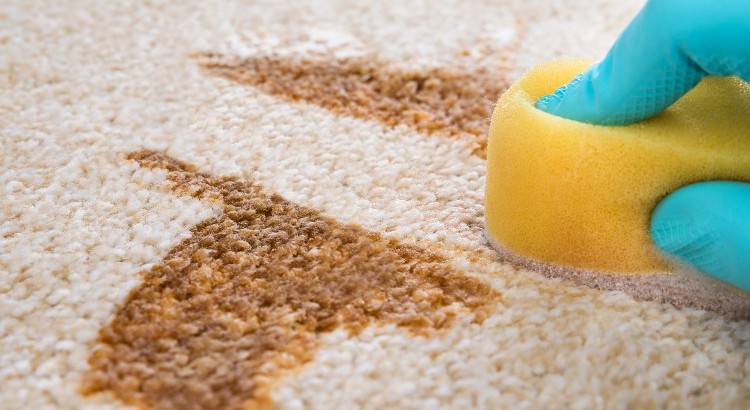
Coffee and Tea Stains
Coffee and tea are among the most common carpet stains, particularly because they tend to happen at high-traffic times when people are moving quickly and not paying close attention to their cups.
What to do immediately:
- Blot up as much of the liquid as possible with a clean white cloth.
- Mix one tablespoon of dish soap, one tablespoon of white vinegar, and two cups of warm water.
- Apply the solution to the stain using a cloth, working from the outside in.
- Blot repeatedly — you may need to repeat the application several times.
- Rinse by blotting with cold water to remove soap residue.
- Allow to dry completely. Place a stack of paper towels over the area and weigh it down to draw out remaining moisture.
Tip: If coffee had cream or sugar in it, the stain is slightly harder to remove because of the sugar content. Add a small sprinkle of baking soda to the area before applying your cleaning solution — it helps break down the sugars.
Red Wine
Few stains cause more immediate panic than red wine on a light-colored carpet. The good news: it's very treatable if you get to it quickly.
- Blot up as much wine as you can — pour a small amount of cold water directly onto the stain first to dilute it, then blot.
- Sprinkle a generous layer of salt or baking soda over the wet area. Let it sit for 3–5 minutes to absorb the remaining liquid.
- Vacuum up the powder.
- Apply a mixture of dish soap and hydrogen peroxide (1:2 ratio). Test this on a hidden section first — hydrogen peroxide can lighten some darker carpets.
- Blot with a clean cloth until the stain lifts.
- Rinse with cold water and blot dry.
Pet Urine
Pet accidents are a reality for most pet owners, and urine is particularly challenging because it contains ammonia and uric acid — compounds that can permanently alter carpet fibers and backing if left untreated. Urine also leaves an odor that can linger even after the visible stain is gone, because the uric acid crystals reactivate when exposed to moisture (including humidity).
Step-by-step approach:
- Absorb as much urine as possible immediately. Stand on folded paper towels over the area to press them into the fibers.
- Mix a solution of equal parts white vinegar and water. Pour it over the area.
- Let it sit for 5 minutes, then blot dry.
- Sprinkle baking soda over the area and let it sit for several hours (overnight if possible).
- Vacuum up the baking soda.
- For persistent odor, use an enzyme-based pet stain cleaner available at most pet supply stores. These products break down the uric acid at a molecular level.
Important: Avoid using ammonia-based cleaners on pet urine stains. Urine contains ammonia, and using a similar scent can actually encourage your pet to revisit the same spot.
Grease and Oil
Grease from food or oil tracked in from outdoors requires a different approach — water alone won't cut through it.
- Scrape off any solid material with a dull knife or spoon first.
- Apply a small amount of dry dish soap (the kind that cuts grease) directly to the stain.
- Let it sit for 5 minutes.
- Blot with a clean cloth, working from outside to center.
- Rinse with warm (not hot) water and blot dry.
- For stubborn spots, a small amount of rubbing alcohol applied with a cloth can help break down the oil.
Ink
Ink stains vary quite a bit depending on the ink type. Ballpoint ink, marker ink, and printer ink all behave differently. Here's a general approach that works for most:
- Do not wet the stain first — this can spread it.
- Dab a small amount of isopropyl (rubbing) alcohol onto a clean white cloth.
- Press it gently onto the stain and hold for 30 seconds — don't rub.
- Blot with a dry cloth to lift the ink.
- Repeat until the stain no longer transfers to the cloth.
- Rinse with cold water and blot dry.
Mud and Dirt
Counterintuitively, mud is easier to deal with if you let it dry first. Trying to clean wet mud often spreads it further into the fibers.
- Let the mud dry completely — resist the urge to treat it immediately.
- Once dry, break up the dried clumps with your fingers and vacuum thoroughly.
- Mix warm water with a few drops of dish soap.
- Apply with a cloth, blotting the remaining residue.
- Rinse and blot dry.
Candle Wax
Wax spills look dramatic but are actually quite manageable with the right technique.
- Let the wax harden completely — don't try to remove it while it's still soft.
- Once solid, place a plastic bag of ice over it to make it more brittle.
- Break the wax into pieces and pull them up carefully by hand, or use a dull knife to chip them away.
- Place a paper bag or clean white cloth over any remaining wax residue and run a warm iron over it briefly — the wax will transfer to the paper.
- For remaining color (if the candle was dyed), treat with rubbing alcohol.
When DIY Isn't Enough
Most fresh stains respond well to home treatment. But there are situations where professional cleaning is the right call:
- The stain has been sitting for more than 24–48 hours
- Multiple treatments have already been applied, potentially pushing the stain deeper
- The stain covers a large area
- Pet urine has soaked through to the carpet padding or subfloor
- You're dealing with a delicate or expensive carpet (wool, natural fibers, antique rugs)
Professional hot water extraction can reach compounds that home cleaning simply can't, especially for stains that have bonded with the carpet fibers over time. If you've already tried and the stain is still visible, further DIY attempts are unlikely to improve things — and may make a professional clean more difficult.
When in doubt about a particular stain or carpet type, a quick consultation with a cleaning professional can save you both time and the cost of replacing a carpet. We're happy to advise — reach out any time.
Keeping a Stain Kit at Home
One of the most practical things you can do is keep a small stain-response kit somewhere accessible — ideally near the areas where spills are most likely (dining room, living room, hallways). Here's a simple kit that covers most scenarios:
- White cleaning cloths or old white t-shirts (color-free so dye doesn't transfer)
- Plain white paper towels
- White vinegar
- Dish soap (grease-cutting formula)
- Isopropyl alcohol (70%)
- Baking soda
- Hydrogen peroxide (3%)
- Enzyme-based pet stain remover (if you have pets)
- A dull scraping tool (butter knife or old credit card)
Having these on hand means you're not scrambling when a spill happens. The difference between a stain that comes out and one that doesn't often comes down to whether you had what you needed in the first two minutes.
A Note on Carpet Protectors
If your carpet doesn't already have a stain-resistant treatment applied, it's worth discussing with a professional cleaner whether a protector makes sense for your situation. Some carpets come from the factory with treatments like Scotchgard already applied, but these wear down over time — especially in high-traffic areas. A periodic re-application after a professional clean can make everyday maintenance significantly easier.